To become a real estate agent in Chattanooga or Cleveland, Tennessee, you need 60 hours of pre-license education, a passing score on the PSI affiliate broker exam ($63), a 30-hour Course for New Affiliates, an errors-and-omissions insurance policy, fingerprinting, and a $91 application to the Tennessee Real Estate Commission. If you want to work in Dalton, Georgia, you need a separate Georgia license: 75 hours of pre-license education, the PSI Georgia salesperson exam ($119), a GCIC background report, and a $170 state license fee that covers your first four years. Most people finish one license in 6 to 12 weeks. The bigger decision comes after you pass — which brokerage you hang that license with, because that choice determines what you keep from every closing for the rest of your career.
View MoreChattanooga-Cleveland Real Estate Search
"Discover Your Dream Home in Chattanooga: Unveiling the Hidden Gems of Tennessee Living"
Welcome to the scenic and vibrant city of Chattanooga, Tennessee! Nestled amidst the picturesque landscapes of the Tennessee Valley, Chattanooga is not just a city; it's a lifestyle. In this blog post, we'll explore some of the finest homes and neighborhoods in Chattanooga, showcasing the diverse real estate options that make this city a haven for both residents and newcomers.
-
North Shore: Where Community Meets Convenience
- The North Shore district is a charming blend of historic homes, trendy boutiques, and a thriving community atmosphere. Whether you're looking for a cozy cottage or a modern townhouse, North Shore has it all. With the Tennessee River as your backdrop and the Walnut Street Bridge just a stroll away, North Shore effortlessly combines convenience with a touch of urban sophistication.
-
Lookout Mountain: Living on the Edge of Nature
- Imagine waking up to breathtaking views of the Tennessee Valley every day. Lookout Mountain offers a unique blend of upscale living and natural beauty. This residential haven is renowned for its luxurious estates, each designed to capture the essence of mountain living without compromising on modern comforts. It's the perfect choice for those who seek tranquility without sacrificing accessibility.
-
St. Elmo: Historic Charm and Modern Living
- Steeped in history, the St. Elmo neighborhood boasts Victorian architecture, tree-lined streets, and a strong sense of community. This district effortlessly marries the charm of the past with modern conveniences, making it an ideal location for those who appreciate a touch of nostalgia in their everyday lives.
-
Downtown Living: Embracing the Urban Lifestyle
- Chattanooga's downtown area is a thriving hub of activity, with an eclectic mix of condos, lofts, and apartments. Living in the heart of the city means having easy access to renowned restaurants, cultural attractions, and the vibrant Riverfront. Dive into the urban lifestyle while enjoying the close-knit community that downtown Chattanooga offers.
-
Signal Mountain: Elevated Living at Its Finest
- For those seeking an elevated lifestyle, both figuratively and literally, Signal Mountain is the pinnacle of refined living. This residential gem offers exclusive properties with panoramic views, top-notch schools, and a strong sense of community. Discover why Signal Mountain is a coveted destination for those who appreciate the finer things in life.
Conclusion: Chattanooga, Tennessee, is a city that effortlessly combines natural beauty, historic charm, and modern living. Whether you're drawn to the urban energy of downtown or the tranquility of Lookout Mountain, Chattanooga has the perfect home for you. Let us be your guide in finding your dream home in this vibrant city, where every neighborhood tells a unique story and every street is a pathway to a life well-lived. Explore the real estate opportunities that await you in Chattanooga, and embark on a journey to a new chapter of your life in the heart of Tennessee.
How to Become a Real Estate Agent in Chattanooga, Cleveland TN, or Dalton GA (2026)
Collegedale and Apison, TN: The 2026 Neighborhood Guide
suggested_url_slug: collegedale-apison-tn-neighborhood-guide-2026 seo_title: "Collegedale & Apison TN Neighborhood Guide (2026)" meta_description: "Collegedale and Apison TN home prices, school zones, ZIP codes, subdivisions and commute times — a local broker's 2026 neighborhood guide." primary_keyword: "Collegedale TN neighborhood guide" secondary_keywords:
- "Apison TN homes for sale"
- "living in Collegedale TN"
- "Collegedale TN median home price"
- "East Hamilton school zone"
- "Apison Pike widening" rotation_type: "Neighborhood spotlight" published_by: "Realty ONE Group Experts"
Collegedale and Apison are two adjoining southeast Hamilton County communities about 19 miles east of downtown Chattanooga, and they are currently the fastest-appreciating corner of the metro. Collegedale's median sale price reached $491,250 in the three months ending August 2026 — up 19.8% year over year — while neighboring Apison's median hit $665,000, up 19.0%, according to Redfin. Both are rising sharply at a time when Chattanooga citywide is nearly flat at $363,509, up just 1.0%, which tells you where demand in this market has actually gone.
If you are weighing this area against Ooltewah, East Brainerd, or Cleveland, here is the local picture: what you pay, which schools you are zoned for, which subdivisions to look at, and what trips buyers up here.
Where exactly are Collegedale and Apison, and which ZIP codes cover them?
Collegedale is an incorporated city of roughly 11,600 residents in southeastern Hamilton County, covering about 12 square miles. It sits roughly 4 miles from Interstate 75 by way of State Route 317 — the road everyone here calls Apison Pike — and about 19 miles east of downtown Chattanooga. Apison is the unincorporated community immediately south and east of it, running down toward the Georgia state line.
The ZIP code situation is the single most common source of confusion for out-of-area buyers, so get this straight before you start searching:
- 37315 is Collegedale's own ZIP, but its post office handles P.O. boxes only — not street delivery.
- 37363 (Ooltewah), 37302 (Apison), and 37353 (McDonald) actually carry the mail for homes inside Collegedale city limits.
The practical consequence: a house listed as "Ooltewah" may sit inside Collegedale city limits, paying Collegedale property taxes — or it may not. Two listings on the same road can fall on opposite sides of that line. Verify the city line and school zone by parcel, not by the ZIP in the listing; this is the sort of thing that costs people a school assignment they thought they had bought.
How much are homes selling for in Collegedale and Apison?
Here is how the two communities stack up against Ooltewah and Chattanooga citywide, using Redfin's most recent published figures:
| Area | Median sale price | Year over year | Median days on market | Price per sq ft | Data through |
|---|---|---|---|---|---|
| Apison, TN | $665,000 | +19.0% | 171 | $228 | Most recent month, 2026 |
| Collegedale, TN | $491,250 | +19.8% | 33 | $198 | 3 months ending Aug 2026 |
| Ooltewah (ZIP 37363) | $439,801 | −9.3% | 53 | $202 | 3 months ending Jun 2026 |
| Chattanooga (citywide) | $363,509 | +1.0% | 41 | $207 | Aug 2026 |
Figures from Redfin market pages; note the reporting periods differ by area, and both Collegedale and Apison are small enough markets that a handful of high-end closings can move a monthly median. Read the direction of travel, not the decimal.
Two things in that table matter. First, Apison's 171 median days on market alongside a $665,000 median is not a weak market — it is a different kind of market. Apison inventory skews toward acreage, custom builds, and new-construction phases that sit on the MLS while a house gets finished; Collegedale's 33 days reflects conventional subdivision product that moves fast. Selling Apison acreage, plan for a longer runway than a Collegedale seller needs.
Second, Collegedale is appreciating at nearly 20% while the city it borders appreciates at 1%. That gap is the story of this guide.
Why are Collegedale and Apison prices climbing while Chattanooga's are flat?
Three concrete local drivers, not vibes.
McKee Foods. The maker of Little Debbie is headquartered in Collegedale and has committed to more than $500 million in capital projects over a 15-year window, including expansion of its Apison plant — projected to add 125 jobs in its first seven years and 480 in total, per the Greater Chattanooga Economic Partnership. A locally headquartered employer expanding inside the ZIP code is rarer than it sounds.
Southern Adventist University. The private university sits on a roughly 1,300-acre Collegedale campus and has anchored the community since 1916, bringing steady faculty and staff housing demand plus a K-12 affiliated system in Collegedale Academy.
Supply that has not caught demand. Collegedale grew from 8,282 residents in the 2010 census to 11,109 in 2020 and an estimated 11,601 in 2026. The city has been approving new subdivisions — including a 161-home development greenlit in 2022 — and the price data says it still is not enough. Median household income here runs about $70,246.
What schools serve Collegedale and Apison?
Both communities are in Hamilton County Schools, but they feed different buildings, and this is where the city-line problem above becomes expensive.
- Apison addresses generally zone to Apison Elementary (PK–5, 617 students, rated 9 out of 10 by GreatSchools), then East Hamilton Middle and East Hamilton School for grades 9–12.
- Collegedale addresses generally zone to Wolftever Creek Elementary or Ooltewah Elementary, then Ooltewah Middle and Ooltewah High.
Private options are unusually deep for a community this size: Collegedale Academy and Lester Coon Adventist School in Collegedale itself, plus Silverdale Baptist Academy, Grace Academy, St. Nicholas School, and Standifer Gap SDA School in nearby East Brainerd.
One warning we repeat to every buyer here: zoning is drawn by parcel and gets redrawn as the county grows. Confirm the assignment with Hamilton County Schools for the specific address before you write an offer — not from a listing, a builder's sales office, or a ratings site.
Which Collegedale and Apison subdivisions should you look at?
Inventory here splits into three buckets. Established Collegedale subdivisions — Barnsley Park, Mulberry Park, and Wellesley — put you closest to the greenway, The Commons, and the university, generally on smaller lots. Newer Apison developments carry most of the volume: Prairie Pass and Prairie Pass II, Prairie Landing, Capstone Estates, The Farms at Creekside, Hawks Landing, London Woods, Magnolia Farms, and Chestnut Creek Crossing — Prairie Pass being a master-planned community with a pool and clubhouse. Acreage and custom shows up in pockets like Chestnut Cove, Crystal Brook, and Emerald Valley, where larger lots push well past the area median.
The cross-shopping trade-off: Collegedale buys you walkability to the greenway and the university at a lower median; Apison buys you land, newer construction, and the East Hamilton school feed at a premium.
What is it actually like to live here?
The day-to-day is the reason people pay the premium. The Collegedale Greenway is a roughly 3-mile paved path along Wolftever Creek, and the city has been extending it. Little Debbie Park, opened in 2023, has a children's zipline and snack-cake sculptures, which is as Collegedale as it gets. Imagination Station is a train-themed playground behind City Hall with pickleball courts nearby, and Veterans Memorial Park, Nature Nook, and Thatcher Switch Recreational Area fill in the rest. Southern Adventist's campus adds roughly 40 miles of hiking and biking trails, climbing at Goliath Wall, and guided caving. The Commons hosts festivals, concerts, and farmers markets under an open-air pavilion.
Groceries run from the university-operated Village Market — heavy on vegetarian and natural foods, and a genuine local institution — to the Ooltewah Publix, ALDI, Food City, and Walmart Supercenter. Erlanger East and CommonSpirit Memorial Hospital cover healthcare nearby. I-75 at Apison Pike puts downtown Chattanooga, the airport, and the runs to Knoxville, Nashville, Atlanta, and Birmingham in reach.
What should buyers watch out for in Collegedale and Apison?
The Apison Pike widening is not finished. TDOT has been reconstructing about 6.2 miles of SR 317 from I-75 to East Brainerd Road in four segments. The first two (I-75 to Old Lee Highway, and Old Lee Highway to Ooltewah-Ringgold Road) were completed in 2012 and 2017. The third, from Ooltewah-Ringgold Road to Layton Lane, is the current work. The fourth segment — Layton Lane to East Brainerd Road — is not identified for funding in TDOT's 10-Year Project Plan. If your commute runs that stretch, drive it at 7:45 a.m. before you buy, and do not assume relief is coming soon. Verify current status directly with TDOT.
Rates are doing more damage than prices right now. Freddie Mac put the 30-year fixed at 7.40% on October 8, 2026, up from 7.28% the week before and 6.30% a year earlier. On a $491,250 Collegedale purchase with 20% down, that is roughly $2,721 a month in principal and interest versus about $2,433 at last year's rate — nearly $290 a month, before taxes and insurance, for the same house. Get pre-approved before you fall in love with a Prairie Pass floor plan.
Acreage means diligence. Properties outside the municipal system may be on septic and well. Budget to inspect both, and confirm utility availability with the city or utility district, not the seller's disclosure.
Frequently asked questions
Is Collegedale, TN a good place to live? For buyers who want strong schools, a walkable greenway, and a small-city feel roughly 19 miles from downtown Chattanooga, yes. The trade-off is price: Collegedale's median sale price of $491,250 is roughly 35% above Chattanooga's citywide median of $363,509.
What is the median home price in Apison, TN? Apison's median sale price was $665,000, up 19.0% year over year, per Redfin's most recent reporting. Apison skews toward acreage and new construction, which pushes its median well above neighboring communities.
What school district is Collegedale, TN in? Collegedale and Apison are both in Hamilton County Schools. Apison addresses typically feed Apison Elementary and East Hamilton Middle and High; Collegedale addresses typically feed Wolftever Creek or Ooltewah Elementary and the Ooltewah middle and high schools. Confirm by parcel with the district.
Is Collegedale the same as Ooltewah? No. They are separate communities, but Collegedale homes are often addressed with the Ooltewah ZIP code (37363) because Collegedale's own ZIP, 37315, serves P.O. boxes only. A listing labeled "Ooltewah" may be inside Collegedale city limits.
How long does it take to sell a home in Collegedale? Collegedale homes sold in a median of 33 days in the three months ending August 2026. Apison's median was 171 days, reflecting its larger, more custom inventory rather than weaker demand.
Is Collegedale or Apison better for families? Both are family-oriented. Apison tends to win on lot size, newer construction, and the East Hamilton school feed; Collegedale wins on price, proximity to the greenway and The Commons, and private-school options. The right answer depends on your budget and your commute.
Thinking about buying or selling in Collegedale or Apison?
This is a market where the ZIP code on the listing, the school zone, and the city line do not always agree — and where a 171-day median in one community next to a 33-day median in the other means two completely different pricing strategies.
The agents at Realty ONE Group Experts work Collegedale, Apison, Ooltewah, and the rest of the Chattanooga metro every day, with offices in Chattanooga and Cleveland, TN and Dalton, GA. Whether you need to know what your Apison acreage is worth in this market or want a school zone verified before you write an offer, reach out to Realty ONE Group Experts — we will give you a straight answer.
Sources
- Collegedale, TN housing market — Redfin
- Apison, TN housing market — Redfin
- Chattanooga, TN housing market — Redfin
- ZIP 37363 (Ooltewah) housing market — Redfin
- Mortgage Rates Average 7.40% (Oct. 8, 2026) — Freddie Mac
- McKee Foods Expands in Collegedale — Greater Chattanooga Economic Partnership
- Apison Pike (State Route 317) project — Tennessee DOT
- Apison Elementary School — GreatSchools
- Collegedale, Tennessee — Wikipedia
- Collegedale, Tennessee Population 2026 — World Population Review
- Collegedale + Apison neighborhood profile — Choose Chattanooga
- Best Apison, TN Neighborhoods for Upscale Homes — Matt Ward Homes
- Collegedale approves new subdivision to add 161 more homes — Chattanooga Times Free Press
Cleveland TN Housing Market Update: What Homes Are Actually Selling For in October 2026
Homes in Cleveland, TN sold for a median price of $299,702 in August 2026, down 10.0% from a year earlier, and they took a median of 70 days to sell — 15 days longer than last August. At the same time, closed sales jumped 26.6% year over year, so this is not a market where buyers disappeared. It is a market where sellers finally met buyers on price. Bradley County inventory has climbed from 655 total listings in March 2026 to 803 in July 2026, and with the 30-year fixed mortgage averaging 7.28% as of October 1, 2026, negotiating leverage in Cleveland has shifted further toward buyers than at any point in the last several years.
If you are selling in 37311, 37312, or 37323 this fall, the number that matters most is not your neighbor's list price. It is the gap between what sellers are asking and what buyers are closing — and right now that gap is wide.
How much are homes selling for in Cleveland TN?
The median sale price in Cleveland was $299,702 in August 2026. The median list price in September 2026 was $359,990, and the Cleveland, TN metro median listing price sat at $387,200 in July 2026.
That spread of roughly $60,000 to $85,000 between asking and closing is the single most important fact in this market: a meaningful share of Cleveland listings are priced for 2024 and selling, if they sell, at 2026 numbers. The sale-to-list ratio backs it up — Cleveland homes closed at 95.7% of asking in August, down 1.1 points year over year, and only 11.3% sold above list. On a $350,000 asking price, that is roughly $15,000 in price concessions before closing costs.
Is the Cleveland TN housing market a buyer's or seller's market?
It is a buyer's market, and it is the softest of the three markets our offices serve. Redfin scores Cleveland's competitiveness at 15 out of 100 — effectively "not competitive."
Here is how Cleveland compares with Chattanooga on the same August 2026 data set:
| Metric (August 2026) | Cleveland, TN | Chattanooga, TN |
|---|---|---|
| Median sale price | $299,702 | $363,509 |
| Price change year over year | −10.0% | +1.0% |
| Median days on market | 70 days | 41 days |
| Change in days on market | +15 days | −17 days |
| Homes sold | 227 (+26.6%) | 842 (+17.3%) |
| Sale-to-list price ratio | 95.7% | 98.2% |
| Sold above list price | 11.3% | 16.8% |
| Competitiveness score | 15 / 100 | 54 / 100 |
Two markets, 30 minutes apart on I-75, moving in opposite directions. Chattanooga tightened over the past year; Cleveland loosened. For a buyer who works in Hamilton County but can tolerate the commute down I-75 to exit 20 or 25, that $63,807 median price difference is the whole argument.
Why are Cleveland TN home prices falling while sales are up?
Three forces are working at once.
New construction is resetting the price floor. The Cleveland area has roughly 67 active new-home communities and about 563 new homes available, with entry pricing starting near $221,990. Lennar at Summit View and Magnolia Terrace, D.R. Horton at Belcourt Landing, Lone Oaks Farm and Fairview Hills, and Smith Douglas at Upton Landing are advertising from the low $240,000s to the low $330,000s. When a buyer can get a brand-new 1,400-square-foot home at Belcourt Landing from $245,990, a 20-year-old resale across town cannot hold a $320,000 price tag without real condition or location advantages.
Inventory is rebuilding faster than demand. Bradley County's total listing count rose about 23% between March and July 2026, and Movoto put Cleveland at 83 days on market in September 2026 versus 67 a year prior.
Rates moved the wrong way at the wrong time. Freddie Mac's 30-year fixed averaged 7.28% on October 1, 2026, up from 7.03% a week earlier and 6.34% a year ago. The 15-year fixed averaged 6.60%. On a $300,000 purchase with 10% down, the difference between 6.34% and 7.28% is about $170 per month in principal and interest — which is precisely how a buyer who qualified for $330,000 last fall becomes a $300,000 buyer this fall.
Which Cleveland TN areas are holding value best?
Price behavior inside Bradley County is not uniform, and the dividing lines are the ones locals already know.
North Cleveland and the Paul Huff Parkway corridor (37312) carries the strongest demand. The Paul Huff retail corridor, easy access to I-75 exit 27, and zoning into Walker Valley High School keep buyer traffic steady, and most of the newer subdivision inventory sits here.
Central Cleveland and the Keith Street corridor (37311) is the most price-sensitive part of the county. Older housing stock near Lee University and the Michigan Avenue area trades on condition, and rental demand from Lee's student population gives investors a floor that owner-occupant buyers do not provide.
South and east Bradley County (37323) — the Black Fox and Blue Springs side, running out toward Bradley Central High School and the APD-40 bypass — offers the most land per dollar. Buyers looking for an acre or more, a shop building, or a horse-capable lot shop here.
Charleston and the Hiwassee River corridor, along with the SR-60 run toward Georgetown, is the genuinely rural end of the county. Longer marketing times are normal here even in strong markets, and well, septic, and road-frontage questions matter far more than price per square foot.
A practical warning for buyers: Cleveland city limits and Bradley County school zones do not line up neatly. A home with a Cleveland mailing address may feed Cleveland City Schools or Bradley County Schools depending on the parcel, and the city/county tax picture differs as well. Verify both on the specific parcel before you write an offer.
Will Cleveland TN home prices keep dropping in 2027?
The honest answer is that a 10% annual decline is unlikely to repeat, and the local employment base is the reason.
Bradley County's economy is not speculative. Its largest employers include Whirlpool Corporation's Cleveland Division (about 1,600 employees), Bradley County Schools (about 1,160), Peyton's Southeastern (about 1,157), Tennova Healthcare (about 1,100), Jackson Furniture (about 894), Amazon (about 790), and WACKER Polysilicon (about 772). Add Cleveland City Schools, Bradley County Government, and Lee University, and you have a diversified base of manufacturing, healthcare, logistics, and education.
That base is still growing. SK Food Group's 525,000-square-foot prepared-foods plant at Spring Branch Industrial Park represented a $205.2 million investment and is scheduled to reach roughly 840 jobs by 2030. Emero International selected Cleveland for its first U.S. facility and global headquarters, a project projected at about 105 jobs and a $7–8 million annual payroll.
Jobs that pay enough to buy a $300,000 house, arriving in a county that already has one, generally put a floor under prices. Into 2027 we would expect flattening rather than free-fall — unless rates climb further, in which case affordability, not inventory, becomes the binding constraint.
What should Cleveland TN sellers do this fall?
Price to the closed comps, not the active ones. The active listings around you are the ones that have not sold. Use August and September closings in your subdivision and your school zone.
Expect to negotiate roughly 4%. The 95.7% sale-to-list ratio is your planning number. Build it into your net sheet before you list, not after you get an offer.
Compete with the builders on what they cannot offer. Mature trees, a larger lot, an established neighborhood, a lower price per square foot on a comparable floor plan. Builder incentives are real, but a builder cannot sell a buyer a 30-year-old oak canopy.
Consider a rate buydown instead of a price cut. With the 30-year at 7.28%, a seller-paid 2-1 buydown often moves a payment-focused buyer more than an equivalent price reduction — and it protects the comparable sale for your neighbors.
What should Cleveland TN buyers do this fall?
This is the best negotiating position Cleveland buyers have had in years, and the leverage expires when rates fall. Ask for closing costs. Ask for repairs after the inspection. Ask for a rate buydown. On a listing sitting past 70 days, ask for all three.
Get fully underwritten before you shop, not just pre-qualified. And weigh price against rate: buying lower at 7.28% with meaningful seller concessions leaves you the option to refinance later, while an inflated purchase price is permanent.
Cleveland TN Housing Market FAQ
What is the average home price in Cleveland, TN? The median sale price was $299,702 in August 2026, down 10.0% year over year. Median asking prices run higher — about $359,990 in September 2026 — because many active listings are still priced above what buyers are closing.
How long does it take to sell a house in Cleveland, TN? The median was 70 days on market in August 2026, up 15 days from August 2025. Separate September 2026 data put the figure at 83 days. Expect 60 to 90 days for a correctly priced home, and longer in rural Bradley County.
Is Cleveland, TN cheaper than Chattanooga? Yes. The August 2026 median sale price was $299,702 in Cleveland versus $363,509 in Chattanooga — a difference of about $63,800, or roughly 18% less.
What are mortgage rates right now? Freddie Mac's survey put the 30-year fixed at 7.28% and the 15-year fixed at 6.60% as of October 1, 2026. Your actual rate depends on credit, down payment, and loan type, so get a current quote rather than relying on a survey average.
What ZIP codes cover Cleveland, TN? The primary residential ZIP codes are 37311 (central and south Cleveland), 37312 (north Cleveland and the Paul Huff Parkway corridor), and 37323 (east and southeast Bradley County).
Is now a good time to buy in Cleveland, TN? If you plan to stay five years or more and you can carry the payment at today's rate, the current combination of falling prices, rising inventory, and motivated sellers is favorable. If you need to sell an existing home first, sequence it carefully — you are a buyer in a soft market and a seller in the same soft market.
Talk to someone who works this market every week
Realty ONE Group Experts has offices in Chattanooga, Cleveland, and Dalton, so we watch all three of these markets diverge in real time rather than guessing from a national headline. Whether you are weighing a Cleveland move against Chattanooga, deciding between listing this fall and waiting for spring, or trying to find out what your Bradley County home is actually worth after a 10% year, we will pull the closed comps for your street and give you an honest read on timing.
Reach out to Realty ONE Group Experts at rogexperts.com for a no-obligation market analysis of your property or a buyer strategy session for your price range and school zone.
Sources
- Redfin, Cleveland, TN Housing Market (August 2026 data) — https://www.redfin.com/city/3988/TN/Cleveland/housing-market
- Redfin, Chattanooga, TN Housing Market (August 2026 data) — https://www.redfin.com/city/3641/TN/Chattanooga/housing-market
- Movoto, Cleveland, TN Market Trends (September 2026) — https://www.movoto.com/cleveland-tn/market-trends/
- FRED / Realtor.com, Housing Inventory: Total Listing Count in Bradley County, TN — https://fred.stlouisfed.org/series/TOTLISCOU47011
- FRED / Realtor.com, Median Listing Price in Cleveland, TN (CBSA) — https://fred.stlouisfed.org/series/MEDLISPRI17420
- FRED / Realtor.com, Median Days on Market in Cleveland, TN (CBSA) — https://fred.stlouisfed.org/series/MEDDAYONMAR17420
- Freddie Mac Primary Mortgage Market Survey, October 1, 2026 — https://www.freddiemac.com/pmms
- NewHomeSource, New Construction Homes in Cleveland, TN — https://www.newhomesource.com/communities/tn/chattanooga-area/cleveland
- Cleveland / Bradley County Economic Development Council, Largest Employers — https://clevelandbradleyedc.com/largest-employers/
- Tennessee Department of Economic and Community Development, SK Food Group announcement — https://tnecd.com/news/governor-lee-commissioner-mcwhorter-announce-sk-food-group-inc-to-establish-manufacturing-operations-in-bradley-county/
Selling Your Chattanooga Home With Mortgage Rates Above 7%: What Sellers Should Know
Published September 29, 2026 | By Realty ONE Group Experts, Chattanooga, TN
Mortgage rates just crossed 7% for the first time in over a year, and if you're thinking about selling your Chattanooga home, that headline probably raised an eyebrow. The short version: buyers are still out there, homes are selling faster than they were a year ago, and pricing your home realistically matters more than ever. Here's what the latest numbers say and how to use them.
Chattanooga Housing Market at a Glance
|
Measure |
Latest reading |
Source / as of |
|
Median sale price |
$363,509 (+1.0% year over year) |
Redfin, August 2026 |
|
Homes sold |
842 (+17.3% year over year) |
Redfin, August 2026 |
|
Average days on market |
41 days (17 fewer than a year ago) |
Redfin, August 2026 |
|
Sale-to-list price ratio |
98.2% (+0.8 pts year over year) |
Redfin, August 2026 |
|
Offers per home |
About 2 on average |
Redfin, August 2026 |
|
Typical home value |
$319,185 (-1.2% year over year) |
Zillow, Aug. 31, 2026 |
|
Homes for sale / new listings |
1,133 / 259 |
Zillow, Aug. 31, 2026 |
|
Days to pending |
About 30 days |
Zillow, Aug. 31, 2026 |
|
30-year fixed mortgage rate |
7.03% (6.95% last week; 6.30% a year ago) |
Freddie Mac, Sept. 24, 2026 |
A note on the numbers: Redfin and Zillow measure prices differently (median sale price versus a smoothed "typical value" for the whole market), so their figures don't match and shouldn't be compared directly. Where they differ, we lead with the more conservative read: prices are roughly flat, from about -1% to +1% over the past year.
What 7% Mortgage Rates Mean for Sellers
Freddie Mac's weekly survey put the average 30-year fixed rate at 7.03% on September 24, up from 6.95% the prior week and 6.30% a year earlier. The 15-year fixed averaged 6.42%. A higher rate raises the monthly payment for every buyer, which shrinks the price range some of them can shop in.
Even so, Chattanooga's local numbers look steadier than the rate headlines suggest. Redfin's August data shows more homes sold than a year ago, and the typical home spent 41 days on the market, about 17 days less than last year. Homes are selling at around 98% of list price, which tells us buyers are negotiating a little but not walking away.
Key Takeaways for Chattanooga Sellers
-
Price to the market, not to last year's headlines. With prices roughly flat year over year, an aggressive list price can backfire. Homes priced in line with recent comparable sales tend to draw the most early attention.
-
Expect fewer bidding wars. An average of about two offers per home means competition exists, but it's not a bidding-war market. Expect thoughtful buyers who compare options.
-
Presentation matters. With roughly 1,100 homes for sale locally, buyers have choices. Fresh paint, decluttering, and repairs that would show up on an inspection help your home stand out.
-
Consider flexibility on terms. Buyers are watching monthly payments closely. Being open to reasonable requests, such as closing-cost help or a rate buydown, can widen your pool of qualified buyers.
-
Launch strong. Homes are reaching pending status in about 30 days on Zillow's data. Listing when your home is ready, with strong photos, gives you the best shot at that early interest.
Should You Sell Now or Wait?
Nobody can predict where rates go next, and timing the market perfectly is rarely possible. What we can say is that the decision usually comes down to your own situation: where you're moving, how much equity you have, and what you'd be buying next. If you're a move-up seller, a higher rate applies to your next purchase too, so it helps to run both sides of the numbers before deciding.
A local agent can pull recent sales in your specific neighborhood, which can differ meaningfully from the citywide picture. Prices and demand in Signal Mountain, Ooltewah, North Chattanooga, and Hixson each move on their own timelines.
Frequently Asked Questions
How long does it take to sell a house in Chattanooga right now?
According to Redfin's August 2026 data, homes in Chattanooga spent about 41 days on the market on average, roughly 17 days fewer than a year earlier. Zillow reports homes going pending in about 30 days. Timing varies by price, condition, and neighborhood.
What is the median home price in Chattanooga, TN?
Redfin reported a median sale price of $363,509 in August 2026, up about 1% from a year earlier. Zillow's typical home value was $319,185, down about 1.2%. The two measure different things, but both point to a mostly flat market.
Are 7% mortgage rates going to stop buyers from buying my home?
Higher rates reduce what some buyers can afford, but they don't eliminate demand. Chattanooga home sales were up 17.3% year over year in August 2026 per Redfin, and homes sold for about 98.2% of list price.
Is it a good time to sell a house in Chattanooga?
It depends on your goals. Homes are selling faster than last year and prices are steady, though rates have climbed to 7.03%. Pricing correctly and preparing your home well are the biggest factors within your control. A local agent can review your neighborhood's recent sales.
How many offers do Chattanooga homes get?
Redfin's August 2026 data shows an average of about two offers per home, which it classifies as somewhat competitive. Well-priced, well-presented homes are more likely to receive multiple offers.
Talk With a Chattanooga Real Estate Team
Thinking about selling? The agents at Realty ONE Group Experts can give you a free, no-pressure look at what homes like yours have recently sold for. Visit us at 6025 Lee Hwy, Chattanooga, TN, or start at realtyoneexperts.com.
Market figures are third-party estimates as of the dates shown and are not a guarantee of future results. This is general information, not financial advice.
Sources
Chattanooga Fall Housing Market 2026: What Buyers and Sellers Should Know
Chattanooga Fall Housing Market 2026: What Buyers and Sellers Should Know
Published September 12, 2026 · Realty ONE Group Experts, Chattanooga, TN
Chattanooga Market at a Glance
Here is where the local numbers stood heading into September 2026.
Sources: Redfin Chattanooga market data (three months ending June 2026, published July 2026) and the Freddie Mac Primary Mortgage Market Survey for the week of August 27, 2026. A note on variance: Redfin’s single-month average price reading was softer than its three-month median, showing roughly a 2.6% year-over-year decline. Read together, the honest summary is that Chattanooga prices are flat to modestly higher — not surging, not falling off a cliff.
What Actually Changed Over the Summer
Three shifts are worth understanding, because they drive almost every decision you will make this fall.
1. Homes are selling faster, but for slightly less
Thirty-five days on market versus fifty-seven a year ago is a big improvement in speed. At the same time, the average home sold for about 2% below asking, and the share selling above list price fell to 17.5%. Faster does not mean frantic. It means well-priced homes move and overpriced ones sit.
2. Price cuts are now the norm, not the exception
More than one in three Chattanooga listings took a price reduction — up 4.2 points from last year. That is the clearest signal in the data. Sellers who anchored to 2022 comps have been correcting, and by September those corrections are stacked up in the inventory.
3. Rates stopped moving
The 30-year fixed averaged 6.67% in late August, essentially flat for weeks and only about a tenth of a point above where it sat a year ago. The waiting game has gotten less rewarding. Buyers who have been sitting out for a rate drop have mostly just watched prices tick up while paying rent.
Why Fall Often Favors Buyers in Chattanooga
Chattanooga follows a fairly reliable seasonal rhythm. Spring and early summer bring out families trying to move before school starts, which concentrates competition. After Labor Day, that urgency thins out — but the inventory does not disappear overnight.
-
Less competition per home. Fewer buyers are actively touring, so the two-offer average tends to soften into the fall.
-
Motivated sellers. Homes listed in April or May that have not sold are often on their second or third price reduction by September. Those sellers are negotiating, not fishing.
-
More time to do it right. In a slower month you can get a thorough inspection, walk the neighborhood twice, and sleep on it — without losing the house.
-
Room to ask for concessions. With sale-to-list at 97.7%, closing-cost help and repair credits are back on the table in a way they were not in 2021.
The tradeoff is selection. Fewer homes come to market in November and December, so the sweet spot is usually September through early November — the summer inventory is still there and the crowd is not.
What Sellers Should Do Differently After Labor Day
None of the above means it is a bad time to sell. Homes sold in June were up 11.5% over last year, and well-prepared listings are still going quickly. But the strategy has changed.
-
Price to the first two weeks. Your listing gets its largest audience in the first fourteen days. With 35.8% of listings cutting price, the market punishes an aspirational number and rewards a defensible one.
-
Assume the buyer will ask. Budget mentally for a 2–3% gap between list and sale, or price so you can hold firm.
-
Fix the small things first. In a market where buyers have options, deferred maintenance is a negotiating lever handed to the other side.
-
Lean into fall photography. Chattanooga in October photographs beautifully. If your home has a ridge view, a mature yard, or a porch, that is a genuine listing asset for about six weeks.
-
Know your submarket. Signal Mountain and Chattanooga proper are not behaving identically — see below.
One City, Several Markets
Metro-wide averages hide a lot. Competitiveness varies sharply by area, and it changes what a smart offer looks like.
-
Signal Mountain remains one of the tightest submarkets in the region — homes there have been going pending in roughly 15 days, with hot properties moving in about three. Expect to compete.
-
Chattanooga proper sits in the middle: somewhat competitive, about 38 days to pending, with meaningful negotiating room on homes that have been listed a while.
-
Cleveland, just up I-75, has been notably slower — around 64 days to pending and homes selling roughly 4% under list. More patience required from sellers, more leverage for buyers.
-
Ooltewah, East Brainerd, Hixson, and Red Bank each have their own inventory picture. Ask for submarket-level numbers before you set a price or write an offer.
This is exactly the kind of question worth asking a local agent rather than a national portal. The city-level median is a headline; your street is the actual market.
What a 6.66% Rate Means for a Chattanooga Payment
Rough math on the current median-priced home, to make the numbers concrete:
These are principal-and-interest estimates at 6.66% over 30 years. They do not include property taxes, homeowner’s insurance, HOA dues, or mortgage insurance, which apply on most loans with less than 20% down. Hamilton County property taxes and insurance can add several hundred dollars a month, so treat these as a floor, not a full payment. Talk to a lender for a figure you can actually plan around.
Frequently Asked Questions
Is now a good time to buy a home in Chattanooga?
For a buyer who plans to stay several years and is financially ready, fall 2026 is one of the more workable windows Chattanooga has offered recently. Inventory from the spring is still available, more than a third of listings have taken price cuts, and competition thins after Labor Day. The catch is that rates near 6.66% have been stable rather than falling, so waiting has a real carrying cost.
What is the median home price in Chattanooga right now?
About $359,800 for the three months ending June 2026, up roughly 4.3% from the same period a year earlier, according to Redfin. Single-month readings have been softer, so a fair characterization is that Chattanooga prices are flat to modestly higher year over year. Prices vary widely by neighborhood.
How long does it take to sell a house in Chattanooga?
The median home sold in about 35 days over the summer of 2026 — roughly three weeks faster than the year before. Well-priced homes in competitive areas like Signal Mountain have been going pending in about two weeks; homes priced above the market have been sitting considerably longer.
Are Chattanooga home prices going down?
Not broadly. Three-month data showed prices up 4.3% year over year, though a softer single-month reading pointed the other way. The more meaningful shift is not falling prices but falling seller leverage: sale-to-list is 97.7%, fewer homes sell above asking, and price reductions are up. Individual neighborhoods can and do move differently from the citywide number.
Do I need 20% down to buy a home in Chattanooga?
No. Conventional loans are available with as little as 3–5% down, FHA loans at 3.5%, and VA and USDA loans allow qualified buyers to put nothing down — and much of the area outside the city limits is USDA-eligible. Below 20%, expect mortgage insurance, which raises the monthly payment. Tennessee also offers down payment assistance programs worth asking a local lender about.
When is the best time to list a home in Chattanooga?
Spring and early summer bring the most buyers, but they also bring the most competing listings. September and October are a legitimate second window: buyer traffic is lower but the buyers who are out are serious, and your home competes against fewer others. If you missed spring, fall is a better option than waiting for the holidays.
Sources
Redfin — Chattanooga, TN Housing Market (median sale price, days on market, offers per home, sale-to-list ratio, price drops, homes sold; data through June 2026)
Freddie Mac — Primary Mortgage Market Survey (PMMS) (30-year and 15-year fixed mortgage rate averages, week of August 27, 2026)
Redfin — Signal Mountain, TN Housing Market (submarket competitiveness and days to pending)
Redfin — Cleveland, TN Housing Market (submarket competitiveness and days to pending)
Greater Chattanooga REALTORS® — Residential Market Reports (local MLS monthly statistics)
Market data reflects conditions as of August 31, 2026 and changes month to month. This article is general information, not financial or legal advice. Realty ONE Group Experts is an equal housing opportunity brokerage.
How Much Do You Need to Make to Buy a Home in Chattanooga, TN in 2026?
Published August 2026 | Chattanooga Metro Real Estate | Buyer Resources
The short answer: to comfortably afford the median-priced home in the Chattanooga metro, most financial guidelines suggest a household income of $75,000–$95,000 per year — significantly less than what buyers need in Nashville, Atlanta, or most coastal cities. But the real answer depends on which part of Chattanooga you're targeting, how much you put down, and which loan program you use. This guide breaks it all down by price tier, neighborhood, and buyer scenario.
What Is the Median Home Price in Chattanooga in 2026?
Before calculating what income you need, you have to agree on a baseline price — and Chattanooga data varies by source because different tools measure different things.
Here's the honest breakdown:
- Redfin median sale price (what homes are actually closing for): $360,000
- Realtor.com median listing price (what homes are listed for): approximately $359,900
- Zillow Home Value Index (estimated value across all homes): $322,295
- Greater Chattanooga REALTORS® reported a median sales price of $359,000 in December 2025
- Chattanooga metro-wide median listing price (including suburbs): approximately $399,304
The number that matters most for a buyer is what homes are selling for, not what they're listed for. For planning purposes, use $355,000–$360,000 as your Chattanooga city baseline and $395,000–$420,000 if you're targeting the suburbs — East Brainerd, Ooltewah, or East Hamilton County.
How Much Income Do You Need to Buy a Home in Chattanooga?
The most widely used affordability rule is the 28% rule: your total monthly housing payment (principal, interest, property taxes, insurance, and HOA if applicable) should not exceed 28% of your gross monthly income. Lenders also apply a broader 36% debt-to-income rule that covers all debts combined.
Here's how that math works across Chattanooga's price tiers at current rates (30-year fixed at approximately 6.84% as of August 2026):
At $255,000 — Entry-Level Chattanooga City
Starter homes, some older city neighborhoods, condos
- 20% down ($51,000): monthly P&I ≈ $1,319 + taxes/insurance ≈ $1,459/month total
- Income needed (28% rule): approximately $62,500/year
- 5% down ($12,750): monthly P&I + PMI ≈ $1,750–$1,850/month total
- Income needed (28% rule): approximately $75,000/year
At $360,000 — Chattanooga City Median
Established neighborhoods, move-in ready homes, inner suburbs
- 20% down ($72,000): monthly P&I ≈ $1,880 + taxes/insurance ≈ $2,130/month total
- Income needed (28% rule): approximately $91,300/year
- 10% down ($36,000): monthly P&I + PMI ≈ $2,350–$2,450/month total
- Income needed (28% rule): approximately $100,000–$105,000/year
- 3.5% FHA down ($12,600): monthly all-in ≈ $2,500–$2,600/month total
- Income needed (28% rule): approximately $107,000–$111,000/year
At $420,000 — East Brainerd, Parts of Hixson
Family neighborhoods, newer construction, strong school zones
- 20% down ($84,000): monthly P&I ≈ $2,195 + taxes/insurance ≈ $2,480/month total
- Income needed (28% rule): approximately $106,000/year
- 10% down ($42,000): monthly all-in with PMI ≈ $2,750/month total
- Income needed (28% rule): approximately $117,800/year
At $445,000 — Ooltewah, East Hamilton County
Top-ranked schools, newer communities, high demand
- 20% down ($89,000): monthly P&I + taxes/insurance ≈ $2,600/month total
- Income needed (28% rule): approximately $111,400/year
- 10% down: monthly all-in with PMI ≈ $2,900/month total
- Income needed (28% rule): approximately $124,300/year
How Does Chattanooga Compare to Other Tennessee Cities?
This is where Chattanooga's value proposition becomes very clear.
According to Reventure App data, the income needed to spend less than 30% of monthly income on a typical Tennessee mortgage is approximately $89,340 statewide. Chattanooga sits right in that range — but it's dramatically more accessible than Nashville, where buyers need $115,000–$145,000 per year to afford the median home.
| Market | Approx. Income Needed | Median Home Price |
|---|---|---|
| Nashville | $115,000–$145,000 | $463,000+ |
| Knoxville | $80,000–$95,000 | $335,000–$375,000 |
| Chattanooga | $75,000–$95,000 | $355,000–$360,000 |
| Memphis | $65,000–$80,000 | $270,000–$310,000 |
| Clarksville | $60,000–$75,000 | $250,000–$290,000 |
Chattanooga's cost of living index sits at 93.3 (where 100 = national average) — 7% below the U.S. average. Combined with Tennessee's zero state income tax, that gap in take-home pay relative to comparable cities is real and meaningful. A household earning $90,000 in Chattanooga keeps more of it than the same household would in Georgia, North Carolina, or Virginia.
Does the Down Payment Really Matter That Much?
Yes — more than most buyers realize. The down payment doesn't just change your monthly payment; it changes your loan options, PMI costs, and long-term wealth position. Here's a practical illustration on a $360,000 home:
| Down Payment | Monthly Payment (est.) | PMI | Income Needed |
|---|---|---|---|
| 20% ($72,000) | ~$2,130 | None | ~$91,300/yr |
| 10% ($36,000) | ~$2,400 | ~$120/mo | ~$102,900/yr |
| 5% ($18,000) | ~$2,550 | ~$150/mo | ~$109,300/yr |
| 3.5% FHA ($12,600) | ~$2,580 | MIP ~$155/mo | ~$110,600/yr |
The difference between a 20% down payment and a 3.5% FHA loan on the same $360,000 home is roughly $450/month — or about $21,000 over four years. That's not nothing. But for buyers who don't have $72,000 sitting in savings, low-down-payment programs exist precisely to bridge that gap. Keep reading.
What If You Don't Have 20% Down?
This is the reality for most first-time buyers — and there are legitimate paths forward.
FHA Loans — Down payment as low as 3.5% with a credit score of 580+. The trade-off is mortgage insurance premium (MIP), which adds approximately $130–$160/month on a $340,000 loan. FHA rates in Tennessee currently average around 6.32% — slightly better than conventional for buyers with credit scores below 740.
VA Loans — Zero down payment for qualifying veterans and active-duty service members. VA rates are averaging approximately 6.12% in Tennessee right now — the best rate available to eligible buyers. No PMI.
USDA Loans — Zero down payment for buyers purchasing in eligible rural and suburban areas. The USDA income limit in Tennessee is approximately $119,850 for households of 1–4 people. Note: Chattanooga proper doesn't qualify, but some surrounding communities do. Worth checking if you're open to areas just outside the city.
THDA Great Choice Loans — Tennessee Housing Development Agency first-time buyer loans with competitive fixed rates and optional Great Choice Plus down payment assistance of up to 6% of the loan amount. Income and purchase price limits apply, but for eligible buyers this can significantly reduce upfront cash needed.
Chattanooga Neighborhood Enterprise (CNE) — A local nonprofit offering down payment assistance for income-qualified buyers. Households earning up to 100% of area median income (approximately $52,688–$81,250 depending on household size) may qualify for zero-interest loans of up to $40,000 and one-time grants of up to $10,000.
The takeaway: the 20% down payment is a guideline, not a requirement. Millions of buyers purchase homes every year with 3.5%–10% down using well-established programs. The key is understanding the full cost of that choice — monthly payment, PMI, and total interest — before committing.
What About Your Credit Score?
Your credit score affects both whether you're approved and what rate you get — and the rate difference is more significant than most buyers expect.
On a $320,000 loan (20% down on a $400,000 home):
| Credit Score | Approx. Rate | Monthly P&I | Difference vs. Top Tier |
|---|---|---|---|
| 760+ | ~6.60% | ~$2,048 | — |
| 720–759 | ~6.84% | ~$2,096 | +$48/mo |
| 680–719 | ~7.20% | ~$2,170 | +$122/mo |
| 640–679 | ~7.80% | ~$2,293 | +$245/mo |
| Below 640 | ~8.40%+ | ~$2,425+ | +$377/mo |
A buyer with a 640 credit score pays approximately $4,500 more per year in interest than a buyer with a 760+ score on the same loan. If your score isn't where you want it, spending 6–12 months improving it before buying is often worth more than rushing into the market.
Is It Cheaper to Buy or Rent in Chattanooga Right Now?
It's close — and the answer depends heavily on how long you plan to stay.
The average rent in Chattanooga is approximately $1,705/month, while a mortgage payment on the median-priced home with 20% down runs roughly $1,563/month for principal and interest before taxes and insurance. Add taxes and insurance and you're looking at $1,900–$2,100/month all-in to own the median home versus $1,705 to rent.
On a pure monthly cash flow basis, renting is slightly cheaper right now — by roughly $200–$400/month at the median. But that comparison ignores the most important variable: equity. Every mortgage payment builds ownership. Every rent payment doesn't. Over five to seven years in a market like Chattanooga — where values have appreciated consistently even through the current cooling cycle — the equity gain typically eclipses the monthly cost difference.
The break-even point in most Chattanooga scenarios is approximately 3–4 years. If you're planning to stay that long, buying makes financial sense at current prices and rates. If you might move within two years, renting likely makes more sense.
What Income Do You Need to Buy in Specific Chattanooga Suburbs?
If your target is the suburbs rather than the city, here's the quick reference:
| Area | Median Price | Est. Income Needed (10% down) |
|---|---|---|
| Chattanooga city | $360,000 | ~$103,000/yr |
| East Brainerd | $418,750 | ~$116,000/yr |
| Hixson | $380,000–$420,000 | ~$106,000–$117,000/yr |
| Ooltewah | $440,000–$445,000 | ~$122,000–$124,000/yr |
| Signal Mountain | $700,000+ | ~$185,000+/yr |
| Red Bank | $300,000–$340,000 | ~$87,000–$97,000/yr |
| Cleveland, TN (Bradley County) | $310,000–$360,000 | ~$89,000–$103,000/yr |
These estimates use 10% down, 6.84% rate, and the 28% rule. Add taxes, insurance, and any HOA fees specific to the property for a more precise picture.
The Bottom Line: Can You Afford to Buy in Chattanooga?
If your household earns $75,000–$95,000 per year and has some savings for a down payment, the city of Chattanooga is genuinely within reach — especially with FHA, THDA, or down payment assistance programs. That's a meaningful statement in 2026, when most major U.S. metros require six figures just to approach the median home.
The suburbs — East Brainerd, Ooltewah, and the Hamilton County school corridors — require more: $100,000–$125,000 for most scenarios. That's still dramatically below what the same quality of suburb costs near Nashville, Atlanta, or Charlotte.
Chattanooga isn't the cheapest market in Tennessee, but it may be the one that offers the best return on what you spend — jobs, schools, outdoor lifestyle, and a growing economy that isn't showing signs of slowing down.
The most important next step isn't finding the perfect listing. It's sitting down with a local lender to get pre-approved based on your actual income, debt, and credit — and then talking to an agent who knows which neighborhoods and price points align with your real numbers.
We do both. Let's talk.
Schedule a free homebuyer consultation
All monthly payment estimates are illustrative and based on a 30-year fixed rate of approximately 6.84% (NerdWallet/Amortio, August 2026), property taxes of approximately $140–$200/month, and homeowner's insurance of approximately $100–$150/month. Actual payments will vary based on loan terms, credit score, property taxes by zip code, HOA fees, and insurance. This post is for informational purposes only and does not constitute financial or legal advice. Consult a licensed lender for personalized guidance.
Sources: Redfin Chattanooga Housing Market (July 2026), Zillow Chattanooga Home Value Index, Greater Chattanooga REALTORS®, Banner Built Homes Average Home Price Analysis, NerdWallet Tennessee Mortgage Rates (August 2026), Amortio Chattanooga Mortgage Rates (April 2026), Reventure App Tennessee Affordability Data, THDA Homebuyer Programs, Chattanooga Neighborhood Enterprise, HousingData.report, Relocation Genius Chattanooga Market Data.
Living in Ooltewah, TN: A Complete Neighborhood Guide for 2026
Published August 2026 | Chattanooga Metro Real Estate | Neighborhood Spotlight Series
If you've been researching suburbs in the Chattanooga area, you've probably already come across Ooltewah. And there's a reason it keeps showing up at the top of every "best places to live" list in Southeast Tennessee: it delivers on almost everything families relocating to this region are looking for — top-rated schools, abundant new construction, room to breathe, and a commute that doesn't punish you for leaving the city.
This guide covers everything you need to know about living in Ooltewah in 2026 — from home prices and neighborhoods to schools, lifestyle, and what buyers should watch out for before they sign.
Where Is Ooltewah, TN?
Ooltewah sits in eastern Hamilton County, about 20 to 25 minutes from downtown Chattanooga via I-75. It's close enough to the city to access everything Chattanooga offers — restaurants, the riverfront, the Tennessee Aquarium, the arts district — while sitting far enough out to feel like a genuine community with its own identity.
It also sits in a convenient triangle between three major employment centers: downtown Chattanooga to the southwest, the Volkswagen plant to the north, and Amazon and other distribution hubs along the I-75 corridor. That geography has made Ooltewah a natural landing spot for professionals and families alike.
What Are Home Prices in Ooltewah in 2026?
Ooltewah is one of the higher-priced suburbs in the Chattanooga metro — and for good reason. The demand is real and durable.
Here's what the current data shows:
- Zillow average home value: $441,212 (up 0.1% year-over-year)
- Redfin median sale price: approximately $440,000
- Median listing price per square foot: $191–$214 depending on the neighborhood
- New construction median listing: approximately $461,000–$475,000
- Price range overall: mid-$300,000s on the lower end to well over $700,000 for larger custom and golf community homes
The market sits slightly above the national median — about 2% higher according to Redfin — but Ooltewah's overall cost of living runs 12% below the national average, which means the premium is real but it comes with real value in return.
How Competitive Is the Ooltewah Market Right Now?
Redfin rates Ooltewah as "somewhat competitive" — a balanced market where buyers have room to be deliberate without losing every home they look at.
Key stats for mid-2026:
- Homes are averaging 49–61 days on market depending on the source and property type
- Most homes receive about 2 offers and sell for close to list price
- New construction homes are more competitive — averaging 6 offers and selling in about 62 days
- In the past month, 93 homes sold in Ooltewah — this is an active market
The days of zero-contingency offers and bidding wars above asking price have largely passed. Buyers today have time to inspect, compare, and negotiate. That said, well-priced homes in high-demand pockets still move quickly, particularly anything near Ooltewah schools or in established communities with strong amenities.
What Neighborhoods Are Inside Ooltewah?
Ooltewah isn't a single neighborhood — it's a collection of distinct communities, each with its own personality and price point.
Cambridge Square area — Ooltewah's walkable heart. A mixed-use district with restaurants, boutiques, grocery, coffee shops, and community events. If you want the closest thing to a walkable town center in a suburban setting, this is it. New and established homes nearby span a wide range of prices and styles.
Windstone — A gated golf community anchored by WindStone Golf Club, which offers private membership options for golf, pool, tennis, and fitness. European-inspired brick and stone homes, townhome pockets, and larger estates. One of the area's most established upscale communities.
Seven Lakes — A popular planned community with a neighborhood feel, sidewalks, and amenities. Strong demand from families and a consistent resale market.
Hampton Creek and Hampton on the Lake — Active-lifestyle communities with lake access and amenity packages. One of the top picks for buyers seeking a gated environment with recreational access.
The Honors Course area — High-end custom homes and estate properties near one of the most acclaimed private Pete Dye golf courses in the country. This is Ooltewah's luxury tier — privacy, larger lots, and prestige access.
Greenbriar Cove (Collegedale area) — An active-adult community with an indoor pool, fitness center, clubhouse, and social calendar. Low-maintenance patio homes and townhomes from the mid-$200,000s to $600,000s. A standout option for buyers 55+ who want amenities without the upkeep.
Bainbridge Park, Thunder Farms, Hunter Village, Sweet Briar — Established and newer subdivisions offering more accessible price points in the $350,000–$500,000 range. Good options for move-up buyers and those wanting newer construction without the top-tier price tag.
Farms at Creekside, Nature's Cove, James Creek — Newer communities emphasizing outdoor lifestyle, creek-side settings, and community connection. Nature's Cove in particular is designed around walkability, wellness amenities, and a connection to Wolftever Creek.
What Are the Schools Like in Ooltewah?
This is the single biggest driver of demand in Ooltewah, and the reputation is well-earned.
Ooltewah is served by Hamilton County Schools, with Ooltewah Elementary, Ooltewah Middle School, and Ooltewah High School serving most of the community. These schools consistently rank among the highest-rated in Hamilton County, which enrolls over 45,000 students. The district blends academic rigor with strong extracurricular programming and modern educational technology.
Collegedale Academy is a well-regarded private option just minutes away — a popular choice for families seeking faith-based education with strong academics.
Southern Adventist University is located in nearby Collegedale, and the University of Tennessee at Chattanooga and Chattanooga State Community College are accessible within a 30-minute drive.
One important note: school zones can and do change. Always verify the assigned schools for a specific address through the Hamilton County Schools official zoning tool before you make an offer — don't rely on what a listing or a neighbor tells you.
Who Is Moving to Ooltewah?
The buyer profile is fairly consistent: families relocating from Atlanta, Nashville, and coastal metros who are drawn to the school system, the lower cost of living, and the suburban quality of life. Redfin data confirms that Atlanta buyers search Ooltewah more than any other outside metro, followed by Los Angeles and Miami.
Ooltewah also draws a significant number of remote workers — EPB's gigabit fiber internet extends to Ooltewah, making it one of the few suburban markets in the Southeast where enterprise-grade internet is genuinely available outside the urban core. For someone leaving a coastal city to work remotely, Ooltewah checks every box.
Volkswagen, Amazon, BlueCross BlueShield, and healthcare systems like Erlanger and CHI Memorial anchor the employment side. For families where one or both partners commute locally, the proximity to multiple employer hubs along I-75 makes the math work.
New Construction vs. Resale in Ooltewah — Which Should You Choose?
Ooltewah has the most active new construction market in the Chattanooga metro, with over 150 new homes currently listed and multiple subdivisions offering options from the mid-$300,000s to well over $700,000. For buyers who have flexibility on timing, this opens up real choices.
New construction advantages:
- Choose your lot, floor plan, and finishes
- Modern layouts, energy efficiency, and builder warranties
- No bidding against other buyers for the same home
- Move-in-ready options and presale opportunities both exist
What to watch out for with new construction in Ooltewah:
- Some communities are in final opportunity status — Hamilton on Hunter had only 3 homes remaining in spring 2026. When a community sells out, it's gone.
- Build timelines run approximately 6–7 months for many communities. Factor that into your planning if you need to move by a specific date.
- Sewer capacity is a real issue in parts of Ooltewah. Hamilton County's Water & Wastewater Treatment Authority has reported constrained sewer capacity in some areas. Before relying on a builder timeline or choosing a specific lot, confirm in writing that the property has a WWTA sewer commitment. This isn't the most exciting part of buying a home, but it matters.
- HOA fees and guidelines vary significantly between communities. Get the full picture before you fall in love with a specific plan.
Resale advantages:
- Established landscaping and mature neighborhoods
- Easier to assess true value from comparable sales
- Faster closing timelines
- Negotiate credits for updates or repairs instead of paying builder premiums
The right answer depends on your timeline, priorities, and how important customization is to you. A good buyer's agent who knows Ooltewah's builder relationships and resale inventory is worth a lot here.
What Is There to Do in Ooltewah?
More than you'd expect from a suburb its size:
Cambridge Square is the social center of Ooltewah — a walkable mixed-use district with local restaurants, boutiques, coffee shops (including fan-favorite The Crosby Baker), seasonal events, and a genuine sense of place. It's the kind of spot that makes people say "I didn't expect this in a suburb."
Harrison Bay State Park and Chickamauga Lake are minutes away, offering boating, fishing, swimming, and lake recreation. This is a major draw for outdoor-oriented families.
The Ooltewah Club and WindStone Golf Club serve golfers, and the Honors Course — a private Pete Dye design that has hosted PGA events — sits in the neighborhood for those seeking world-class access.
Hiking and outdoor recreation extend outward from Ooltewah in every direction: Lookout Mountain, Signal Mountain, the Cumberland Trail, and the Tennessee River gorge are all within reasonable range.
For bigger-city needs — major concerts, the Tennessee Aquarium, Bluff View Art District, professional sports, specialty healthcare — downtown Chattanooga is 20–25 minutes down I-75.
What Are the Practical Considerations Before Buying in Ooltewah?
Traffic: I-75 access is convenient, but growing traffic at key intersections — particularly Mahan Gap Road at Ooltewah-Georgetown Road, Hunter Road, and the I-75/Volkswagen Drive interchange — is a real consideration. Hamilton County proposed traffic and safety studies at these locations in April 2026. If your daily commute routes through these intersections, drive them at peak hours before you buy.
Utilities: Some Ooltewah subdivisions connect to public sewer; others use private septic systems. This affects maintenance, inspection requirements, and future expansion. Know which system your prospective home uses.
Radon: Tennessee has pockets of elevated radon, and Ooltewah is among them. Radon testing during your inspection period is inexpensive and worth doing. Mitigation is common and effective if needed.
Septic and well inspections: If the home isn't on public sewer, get a professional septic evaluation — not just a visual check. Same goes for well water if applicable.
Down payment assistance: First-time buyers and qualifying move-up buyers should look at Tennessee Housing Development Agency (THDA) Great Choice loans and Great Choice Plus down payment assistance. Income and purchase price limits apply, but for buyers who qualify, this can meaningfully reduce the cash needed to close.
Is Ooltewah a Good Investment?
The fundamentals are strong. Buyers who purchased five years ago have seen substantial equity appreciation driven by consistent relocation demand, a top-ranked school system, and the limited supply of suburban land in desirable Hamilton County locations. That demand base isn't going away — the employers are here, the schools are here, and the quality of life is real and documented.
Projected appreciation for 2026 in the Chattanooga metro runs 2–4% — modest but healthy. Ooltewah tends to outperform the metro average in appreciation because of its specific combination of school quality and new construction activity. Buyers who get in now, before prices continue climbing, are positioning themselves well for the next five to seven years.
Ready to Explore Ooltewah?
Whether you're relocating from Cleveland, Chattanooga, or across the country, Ooltewah deserves a serious look. We know the streets, the subdivisions, and the builders — and we know which communities have sewer commitments and which ones are in final closeout.
Let's find the right fit for your family.
Schedule a free consultation or home search
Sources: Zillow Ooltewah Home Value Index (June 2026), Redfin Ooltewah Housing Market Data, Movoto Ooltewah Market Report (July 2026), Joe Leffew Properties Ooltewah Neighborhood Guide, Lawrence Team Homes Ooltewah Buyer Trends (June 2026), Bridge City Realty Buying Guide, Hamilton County Schools, THDA Homebuyer Programs.
School zones, sewer availability, and market data are subject to change. Always verify current details directly with Hamilton County Schools and Hamilton County WWTA before making a purchase decision.
Living in East Brainerd, TN: A Complete Neighborhood Guide for 2026
Published August 2026 | Chattanooga Metro Real Estate | Neighborhood Spotlight Series
If you've been exploring the Chattanooga suburbs and want the full package — established neighborhoods, strong schools, unbeatable convenience, and a price point that's still accessible — East Brainerd deserves a serious look. It's one of the most populated and consistently in-demand communities in Hamilton County, and for good reason.
This guide breaks down everything you need to know about living in East Brainerd in 2026: home prices, neighborhoods, schools, lifestyle, and what buyers should know before making a move.
Where Is East Brainerd, TN?
East Brainerd sits on the eastern edge of Chattanooga, in Hamilton County, with primary access via East Brainerd Road, Gunbarrel Road, and Ooltewah-Ringgold Road. It's approximately 20 minutes from downtown Chattanooga and directly adjacent to the Hamilton Place corridor — the largest retail and commercial hub in the region.
I-75 access is a major practical advantage. East Brainerd puts you within easy reach of downtown Chattanooga to the west, Ooltewah and the Volkswagen plant to the northeast, and Ringgold, Georgia to the south. For families with two working adults commuting in different directions, that centrality matters.
What Are Home Prices in East Brainerd in 2026?
East Brainerd offers meaningful value compared to Ooltewah or Signal Mountain while still delivering strong schools and suburban quality of life. Here's the current picture:
- Median listing price (Homes.com): $429,900
- Median sale price (last 12 months): $418,750 — down approximately 3% year-over-year
- Median listing price per square foot: approximately $208
- New construction median listing (Redfin): $428,000
- Cost of living: 1% below the national average — making East Brainerd genuinely accessible by national standards
Prices have softened modestly compared to their 2023–2024 peak, which is actually good news for buyers entering the market right now. This isn't a distressed market — demand is solid, 71.5% of residents own their home (a strong indicator of community stability), and college graduates make up 45.8% of the population. These are the fundamentals of a neighborhood that holds value over time.
To put the income question plainly: using a 28% debt-to-income rule and current rates around 6.3%, a household earning approximately $91,000 per year can comfortably afford the median home in East Brainerd. That puts homeownership within reach for a wide range of dual-income families and professionals in the Chattanooga metro.
How Long Are Homes Sitting on the Market?
Homes in East Brainerd are averaging 44–68 days on market depending on the source and price tier, which is healthier than it sounds. The range reflects different property types — new construction tends to move more slowly, while well-priced resales in desirable pockets move faster.
In the past month, 21 homes sold in East Brainerd, alongside 9 condos and 14 townhouses — demonstrating a diverse, active market across multiple buyer types. Most homes receive about 1 offer and sell near list price, meaning sellers aren't in a position to demand premiums above asking, but buyers aren't finding abandoned inventory either. It's a market that rewards preparation, not urgency.
What Makes East Brainerd Different from Ooltewah?
This is a question buyers in the Chattanooga metro ask often, and it's worth answering directly.
East Brainerd is more established. Much of the housing stock dates from the late 1990s through the 2010s — solid construction, mature landscaping, larger lots in many cases, and neighborhoods that already have a proven track record. Ooltewah skews newer and more master-planned.
East Brainerd is more convenient. Hamilton Place Mall, Trader Joe's, hundreds of restaurants, urgent care facilities, fitness centers, medical offices — it's all right here. You don't drive to amenities; you live among them.
East Brainerd is more accessible. With a median price running roughly $20,000–$30,000 below Ooltewah, East Brainerd opens doors for buyers who want Hamilton County schools and suburban quality without stretching to the upper $400,000s.
Ooltewah has more new construction. If a brand-new home with builder warranty and modern finishes is a priority, Ooltewah has a larger pipeline. East Brainerd has new construction — 28 new homes currently listed at a median of $428,000 — but it's a smaller slice of the overall inventory.
Neither is objectively better. The right answer depends on what you're optimizing for.
What Are the Neighborhoods Inside East Brainerd?
East Brainerd isn't a single subdivision — it encompasses over 30 distinct neighborhoods spanning a wide range of styles, ages, and price points.
Hurricane Creek Estates — One of East Brainerd's most recognized communities. A neighborhood with a community pool complex, established streets, and strong resale demand. Well-priced homes here move quickly. Zoned for the highly sought-after Westview Elementary and East Hamilton schools.
Emerald Valley — A well-established neighborhood offering spacious lots and classic suburban homes at prices that compare favorably to newer communities.
Brock Pointe — Popular with move-up buyers seeking more space and newer construction in an established East Brainerd location.
Engel Park — A newer community that's attracting buyers who want modern finishes and open floor plans without the Ooltewah price premium. A 2024-built home here is currently on the market, reflecting the newer inventory available.
Davidson Meadows — A thoughtfully designed new community from Banner Built Homes with a private looped cul-de-sac layout. Currently offering $10,000 in down payment assistance through the builder, making it an attractive entry point for qualifying buyers.
The Gardens at Heritage Green — A low-maintenance condo and single-family community popular with retirees and professionals who want convenience and simplicity. Located minutes from Hamilton Place with single-level living options.
Keystone — An established neighborhood known for custom construction and larger floor plans, offering a step up for buyers seeking more square footage.
The zip code 37421 covers most of East Brainerd and is one of the most actively searched zip codes in the Chattanooga metro.
What Are the Schools Like in East Brainerd?
School access is one of the primary reasons families choose East Brainerd, and the reputation is backed by data.
Westview Elementary School is the crown jewel of East Brainerd's school landscape. Located at 9629 East Brainerd Road, Westview ranks in the top 5% of public schools in Hamilton County with math proficiency at 70% and reading proficiency at 67% — well above county and state averages. The student-teacher ratio is 17:1. It is consistently one of the most requested school assignments in the district.
East Brainerd Elementary School serves a larger student population and is the largest elementary school in Hamilton County. The district is actively planning to expand East Brainerd Elementary's capacity, with architects currently reviewing a conversion of the nearby Cigna building into an annex to accommodate the area's continued growth — a strong signal of ongoing investment in the community.
East Hamilton Middle School and East Hamilton High School serve older students and are the subject of a district-proposed merger in terms of academic programming — putting middle and high school students under one school number (though not one roof) to expand extracurricular opportunities and create earlier connections between grade levels.
One critical note for buyers: school zone assignments in East Brainerd vary significantly by street address — a difference of one block can place children in Westview Elementary versus East Brainerd Elementary. Always verify the specific school zone for any property you're seriously considering through the Hamilton County Schools official zone map. Do not rely on listing descriptions or neighborhood names alone.
What Is There to Do in East Brainerd?
East Brainerd's biggest lifestyle advantage is sheer convenience. Nearly everything a family needs day-to-day is within a five-minute drive.
Hamilton Place Mall — The largest shopping center in Chattanooga, with major retailers, dining, a movie theater, and entertainment. It's essentially the commercial heart of the region.
Camp Jordan Park — A beloved community park featuring sports fields, a walking track, playgrounds, and event space. Regularly hosts community festivals, youth sports leagues, and seasonal events that give East Brainerd a small-town feel despite its suburban size.
Grocery and daily errands — Trader Joe's, multiple grocery chains, Costco, and virtually every major retailer are minutes away. East Brainerd may be the most errand-efficient neighborhood in the Chattanooga metro.
Dining — From locally owned spots to every major chain, the restaurant density along Gunbarrel Road and the Hamilton Place corridor is unmatched in the region.
Outdoor access — While East Brainerd isn't on a mountain, it sits within easy range of Lookout Mountain, the Tennessee Riverwalk, and the broader Chattanooga outdoor scene. You're 20 minutes from world-class hiking, rock climbing, and river access.
Healthcare — Multiple urgent care facilities, specialist offices, and hospital campuses are located in or directly adjacent to East Brainerd. For families with young children or aging parents, this proximity is a genuine quality-of-life asset.
Is East Brainerd a Good Investment in 2026?
The fundamentals say yes. Consider what East Brainerd has working in its favor:
- High homeownership rate (71.5%) signals community stability and neighbor investment in properties
- Consistent demand driven by school access — Westview Elementary's reputation alone drives sustained buyer interest
- The district is actively investing in school capacity expansion, reflecting confidence in continued residential growth
- Price per square foot is competitive relative to national comparables and below Ooltewah
- The 37421 zip code is one of the most searched in the Chattanooga metro by relocating buyers
The modest year-over-year price softening (approximately 1–3% depending on the source) reflects the broader market normalization happening nationally and locally — not a collapse in fundamentals. For long-term buyers, buying during a period of softening prices and balanced competition is historically one of the better entry points.
One watch item: as the East Brainerd area continues to grow, traffic on key corridors — particularly Gunbarrel Road and the I-75/East Brainerd interchange — can be congested during peak hours. If your daily commute involves these routes, do a test drive at 7:30 AM before you commit.
What Should East Brainerd Buyers Know Before Making an Offer?
Get specific about school zones. Verify the assigned school at the specific address through Hamilton County Schools' official zone tool — not a listing description, not a neighbor's information.
Compare new construction carefully. Builder incentives like the $10,000 closing cost assistance at Davidson Meadows can be compelling, but always factor in HOA fees, lot premiums, and upgrade costs when comparing to resale.
The condo and townhome market here is active. If you're a first-time buyer or downsizer, East Brainerd has one of the stronger attached-home markets in the Chattanooga metro. The Gardens at Heritage Green and similar communities offer low-maintenance options at prices below the single-family median.
Inspect thoroughly. Homes built in the late 1990s and 2000s are at the age where HVAC systems, roofs, and water heaters may need attention within the first few years of ownership. Budget accordingly and negotiate credits where appropriate.
Pre-approval is non-negotiable. Even in a balanced market, sellers in East Brainerd aren't entertaining unqualified offers. Have your financing in order before you tour.
Ready to Explore East Brainerd?
Whether you're relocating from Cleveland, comparing East Brainerd to Ooltewah, or just starting your search in the Chattanooga metro, we know this area — the streets, the subdivisions, the school zones, and the value pockets that don't show up in a Zillow search.
Let's find the right neighborhood for your family.
Sources: Homes.com East Brainerd Market Data, Redfin East Brainerd Housing Market, Movoto East Brainerd Market Report (March 2026), Lawrence Team Homes Neighborhood Guide, Public School Review Hamilton County Rankings (2026), Hamilton County Schools District Website, NewsChannel 9 / Hamilton County school capacity reporting (November 2025), U.S. Census Bureau.
School zone assignments are subject to change. Always verify directly with Hamilton County Schools before making a purchase decision based on school access.
North Chattanooga Real Estate: Neighborhood Guide & Market Update (2026)
North Chattanooga Real Estate: Your 2026 Neighborhood Guide Published June 2026
Realty ONE Group Experts · Chattanooga, TN
If you've spent an afternoon strolling across the Walnut Street Bridge, grabbing coffee on Frazier Avenue, or watching your kids run through Coolidge Park, you already understand why North Chattanooga — often called the NorthShore — is one of the most beloved places to live in the city. It blends walkable city energy with riverfront charm, and demand for homes here reflects that. Here's what buyers and sellers should know about the North Chattanooga market in 2026.
Why People Love North Chattanooga
North Chattanooga sits just across the Tennessee River from downtown, giving residents quick access to the city center while keeping a distinct neighborhood feel. It's one of Chattanooga's most walkable areas, anchored by the shops, restaurants, and galleries of Frazier Avenue and the green space of Coolidge Park and Renaissance Park.
-
Walkability: dining, boutiques, and coffee shops within strolling distance of home.
-
Riverfront lifestyle: parks, the Walnut Street Bridge, and river access at your doorstep.
-
Character homes: a mix of restored historic bungalows, Craftsman houses, and newer infill builds.
-
Proximity to downtown: minutes from Chattanooga's business district, hospitals, and event venues.
North Chattanooga Market Snapshot (2026)
Neighborhood-level figures are based on a small number of sales and can swing month to month. Treat these as directional.
What the Numbers Tell Us
North Chattanooga is pricier than the Chattanooga metro as a whole — the citywide median sits around $335,000, while North Chattanooga is closer to $575,000. That premium reflects location, walkability, and the character of the housing stock. Prices are up sharply year over year, though the mix of homes selling (larger, renovated, and higher-end properties) can pull the median around, which is why price-per-square-foot has moved differently than the headline number. The practical takeaway: this remains a high-demand pocket where well-presented homes attract serious interest.
If You're Buying in North Chattanooga
-
Get pre-approved before you shop — desirable homes here still move, and sellers take financed offers more seriously with a strong pre-approval in hand.
-
Decide what you're paying for: walkability to Frazier Avenue commands a premium over homes a few blocks further out.
-
Budget for character: historic homes are charming but may need updates; factor inspection findings into your offer.
-
Move decisively on the right home, but lean on comparable sales so you don't overpay in a thin-inventory market.
If You're Selling in North Chattanooga
-
Lean into lifestyle: market the walkable location, parks, and river access — that's what buyers are paying a premium for.
-
Presentation pays off: professional photography and light staging help character homes show their best.
-
Price to the block, not the metro: North Chattanooga comps differ meaningfully from citywide averages.
-
You likely hold strong equity: values here have climbed, so it's worth getting a current, professional valuation.
Frequently Asked Questions
What is the average home price in North Chattanooga?
As of 2026, the median sale price in North Chattanooga is approximately $575,000 — notably higher than the Chattanooga metro median of around $335,000, reflecting the neighborhood's walkability and location.
Is North Chattanooga a good place to live?
Many residents rank it among the best neighborhoods in Chattanooga for its walkability, riverfront parks, dining and shopping on Frazier Avenue, and quick access to downtown.
Is North Chattanooga a buyer's or seller's market?
It currently leans toward a seller's market — inventory is limited and desirable homes attract competitive interest, though it's less frenzied than in peak years.
How long do homes take to sell in North Chattanooga?
Homes in North Chattanooga are selling in roughly 60 days on average in 2026.
What is the NorthShore in Chattanooga?
“NorthShore” is a common nickname for the North Chattanooga area along the north bank of the Tennessee River, known for Frazier Avenue, Coolidge Park, and the Walnut Street Bridge.
Thinking About North Chattanooga?
Whether you're hoping to land a NorthShore bungalow or you're ready to sell and capture your equity, having current, block-level insight makes all the difference. At Realty ONE Group Experts, we know these streets — and we'd be glad to help you buy or sell with confidence. Reach out for a free consultation or a personalized home valuation.
Realty ONE Group Experts · 5959 Shallowford Rd, Chattanooga, TN · realtyoneexperts.com
Sources
Redfin — North Chattanooga Housing Market
Redfin — Chattanooga, TN Housing Market
Is Now a Good Time to Buy a Home in Chattanooga
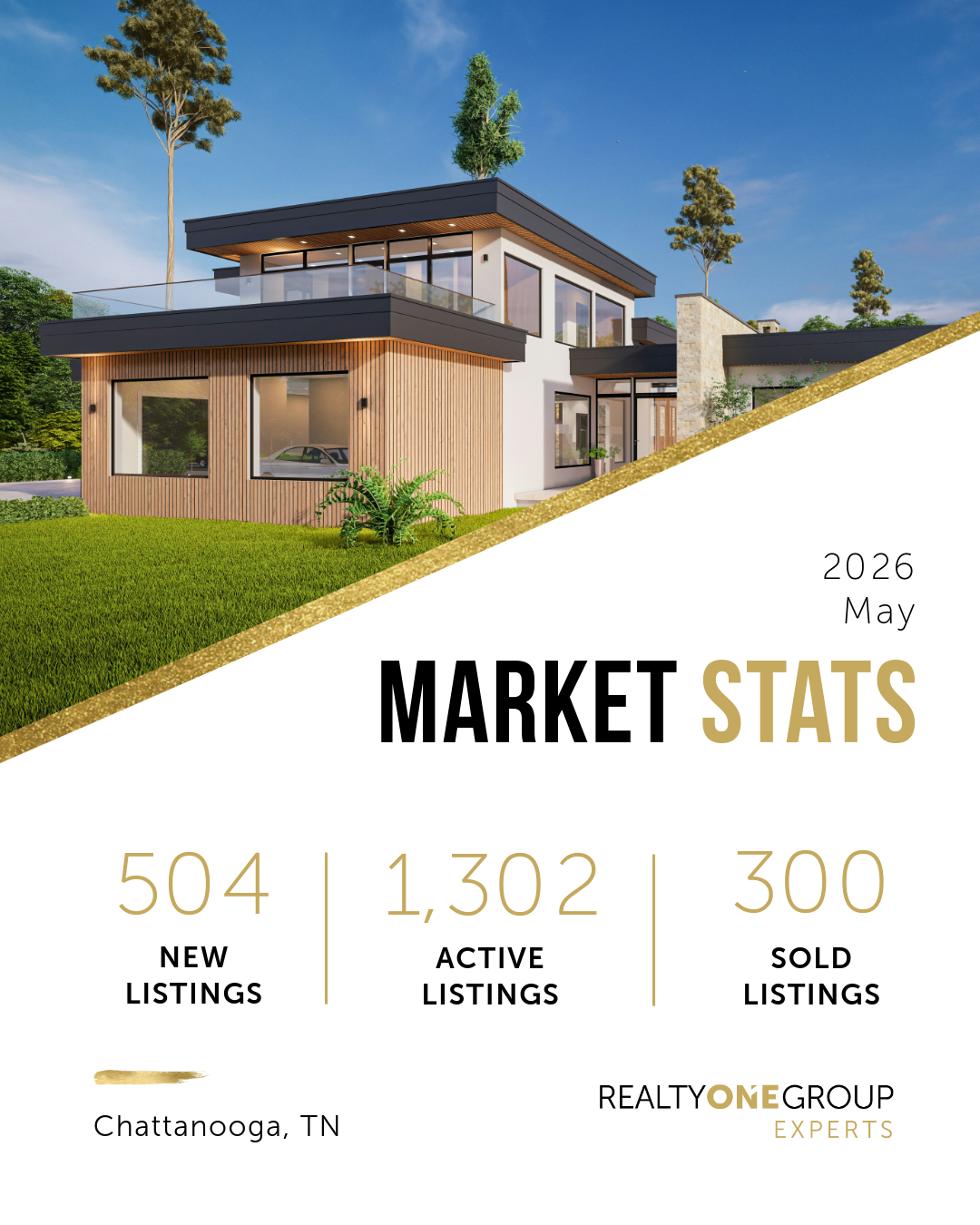
Is Now a Good Time to Buy a Home in Chattanooga, TN?
Published July 2026 | Chattanooga & Southeast Tennessee Real Estate
The short answer: Yes — for most buyers, summer 2026 is one of the better windows we've seen in Chattanooga since before the pandemic surge. More inventory, moderated prices, less competition, and mortgage rates that have pulled back meaningfully from their 2023 highs. But the full picture is more nuanced than a headline, so let's walk through the data.
What Are Home Prices Doing in Chattanooga Right Now?
Chattanooga home prices have stabilized after years of rapid appreciation. According to Redfin, the median sale price over the three months ending May 2026 was $356,000 — up 4.0% year-over-year, a healthy but not frenzied pace. Zillow places the average home value at approximately $327,884, essentially flat from a year ago.
The median listing price for the broader Chattanooga-GA metro area came in at $399,304 as of April 2026 (FRED/Realtor.com data), reflecting the higher-priced inventory currently listed. Price per square foot sits at approximately $206 to $214 depending on the source — still well below national averages.
Here's what stands out: Chattanooga home prices are roughly 18% below the national median, even as the city has invested heavily in quality of life, infrastructure, and economic development over the past decade. That gap is part of what continues attracting buyers from Nashville, Atlanta, and beyond.
How Long Are Homes Sitting on the Market?
This is where the market shift is most visible. Homes in Chattanooga are averaging 36 days on market — down significantly from 57 days a year ago. In high-demand neighborhoods like Hixson, Ooltewah, and North Shore, well-priced homes are going under contract in 14 days or less. Hot properties are still moving near list price in as little as 8 days.
The takeaway: this isn't a market where homes linger for months. Buyers have more breathing room than 2021 or 2022, but quality homes priced correctly are still generating offers. Come prepared.
Is Chattanooga a Buyer's Market or Seller's Market in 2026?
It's best described as a balanced-to-slightly-competitive market. Redfin rates Chattanooga as "somewhat competitive," with homes receiving an average of 2 offers and selling for about 2% below list price. That's a far cry from the bidding war environment of 2021–2022, when buyers were waiving inspections and offering tens of thousands over asking.
Inventory has improved meaningfully — active listings grew by roughly 34.5% through 2025, reaching over 2,000 homes. That increased supply gives buyers more options without the extreme pressure of recent years. Forecasts for 2026 call for continued modest inventory growth of 10–15% year-over-year.
What Are Mortgage Rates Doing?
Rates have pulled back significantly from their 2023 peak. The 30-year fixed rate dipped below 6% for the first time since 2022 earlier this year, and industry consensus puts rates in the 6.0%–6.5% range through 2026, with Fannie Mae projecting rates ending the year near 5.9%.
For perspective: on a $340,000 home with 10% down, the difference between a 7% rate and a 5.9% rate is roughly $200 per month — that's real, meaningful affordability improvement. And Tennessee's zero state income tax means a household earning $100,000 annually saves an estimated $4,000–$6,000 per year compared to Georgia, North Carolina, or Virginia. That savings compounds the value of buying here.
Why Do People Keep Moving to Chattanooga?
The demand fundamentals supporting Chattanooga's market are real and durable:
Economy: Volkswagen, BlueCross BlueShield of Tennessee, Amazon, EPB, CHI Memorial, and Erlanger Health System anchor a diverse employment base. The city's unemployment rate sits near 4%, and the tech and manufacturing sectors continue to expand.
Infrastructure: Chattanooga was the first U.S. city to deploy citywide gigabit fiber — a significant draw for remote workers and tech-oriented businesses.
Outdoor lifestyle: Lookout Mountain, Signal Mountain, the Tennessee Riverwalk, rock climbing at Stone Fort, and whitewater rafting on the Ocoee River — world-class outdoor recreation is part of everyday life here.
Location: Chattanooga sits two hours from Atlanta, Nashville, and Birmingham — close enough for business connections and day trips, far enough to feel like home.
Demand from families relocating from Nashville and Atlanta in particular has been steady, and that pipeline shows no signs of stopping.
Which Chattanooga Neighborhoods Should Buyers Watch in 2026?
Not every neighborhood moves the same way. Here's a quick breakdown:
North Shore — Walkable, vibrant, and close to downtown. High demand with premium pricing. Well-priced homes here move fast.
Ooltewah — Fastest-growing submarket in the metro. Strong schools, new construction options, and suburban appeal. A top choice for families.
Signal Mountain — Rated #1 in Hamilton County by Niche. Excellent schools, mountain lifestyle, and privacy. Median listing prices near $785K — this is the premium tier.
Red Bank — One of Chattanooga's best-value opportunities. Just five miles north of downtown with a 10-minute commute, bungalows and new construction, and median prices well below North Shore. An area seeing renewed buyer interest as people seek value without sacrificing access.
Hixson — Lake access, strong schools, and family-friendly character. One of the consistently active markets in the area, with well-priced homes moving in two weeks or less.
East Brainerd and East Chattanooga — Emerging pockets with solid fundamentals for buyers seeking affordability and growth potential.
St. Elmo — Historic neighborhood at the base of Lookout Mountain. Strong community character and walkability with an artistic, independent business feel.
What Should Buyers Do Right Now?
If you're thinking about buying in Chattanooga in 2026, here's the practical advice:
Get pre-approved before you search. The days of leisurely browsing without financing in order are over. Even in a balanced market, sellers won't entertain offers from unqualified buyers. Know your number before you fall in love with a house.
Don't wait for rates to hit 4%. If that happens — which most economists don't expect — every buyer in the metro will flood back in simultaneously, prices will spike, and you'll be competing in bidding wars again. Buying at 6% today and refinancing if rates drop later is a widely accepted strategy.
Focus on the neighborhood, not just the house. Chattanooga's local conditions vary significantly by zip code. A buyer's agent with genuine neighborhood knowledge is worth far more than general market statistics.
Price negotiation is back. On average, homes are selling about 2% below list price. That's real room to negotiate — use it.
The Bottom Line: Is Now a Good Time to Buy in Chattanooga?
Yes, and here's why the case is straightforward:
- Prices are stable to modestly appreciating — not crashing, not surging
- Inventory is meaningfully better than it was in 2021–2023
- Mortgage rates have improved and may soften further
- Chattanooga remains 18% below the national median price
- The city's economic and lifestyle fundamentals are strong and improving
- Competition is manageable — you can actually take time to inspect a home
The combination of improved affordability, real inventory, and sustained demand makes 2026 a window that rewards buyers who are financially ready and working with someone who knows this market. That window won't stay open indefinitely.
Ready to Explore Chattanooga Homes?
Whether you're relocating from out of state, upsizing from Cleveland or Dalton, or buying your first home, we know this market — the neighborhoods, the schools, the streets that appreciate and the ones that don't.
[Contact us today for a free consultation →]
Sources: Redfin Chattanooga Housing Market Data (May 2026), FRED / Realtor.com Housing Inventory Data (April 2026), Zillow Home Value Index, Greater Chattanooga Association of Realtors, Joe Leffew Properties Market FAQ, Lawrence Team Homes 2026 Forecast, Grace Frank Group Chattanooga Real Estate Forecast.
This post is for informational purposes only and does not constitute financial or legal advice.
Connect With Us
:format(webp):quality(80)/u.realgeeks.media/sherlinrealestate/Facebook.jpg)
:format(webp):quality(80)/u.realgeeks.media/sherlinrealestate/Twitter.jpg)
:format(webp):quality(80)/u.realgeeks.media/sherlinrealestate/YouTube.jpg)